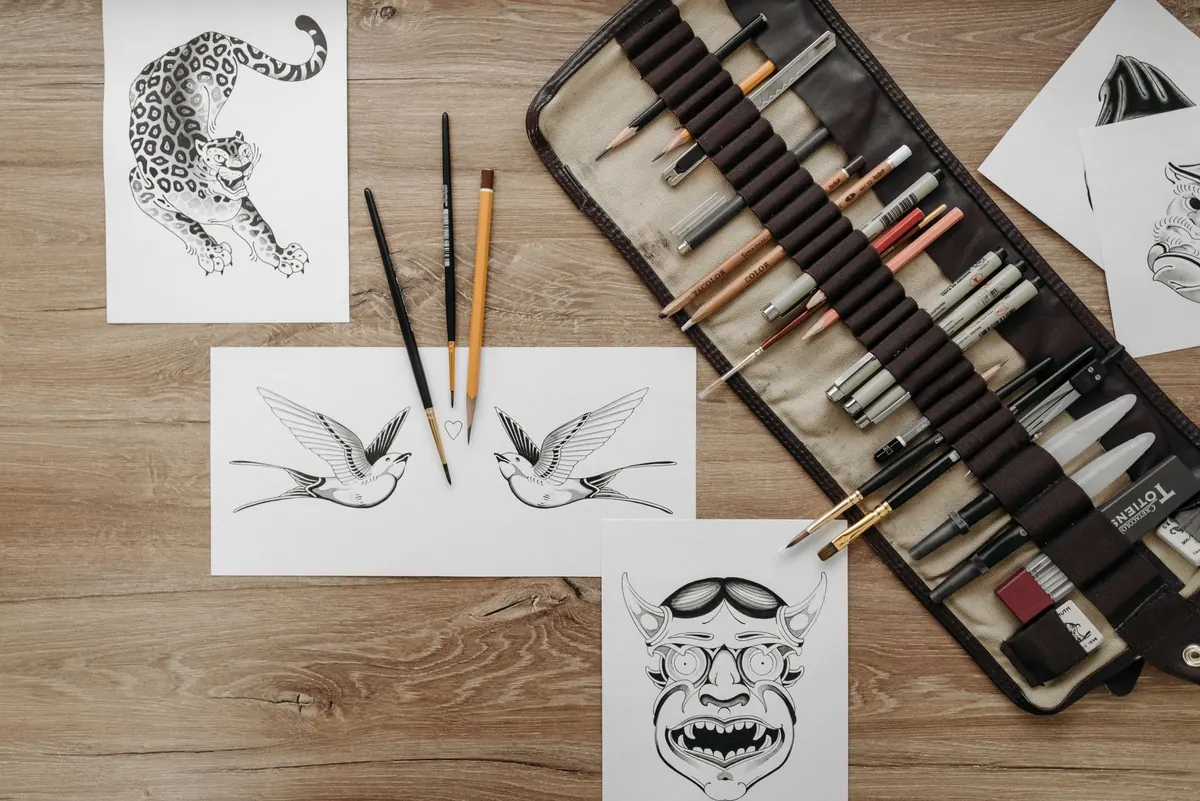

The Role of Personal Projects in a Creative Portfolio
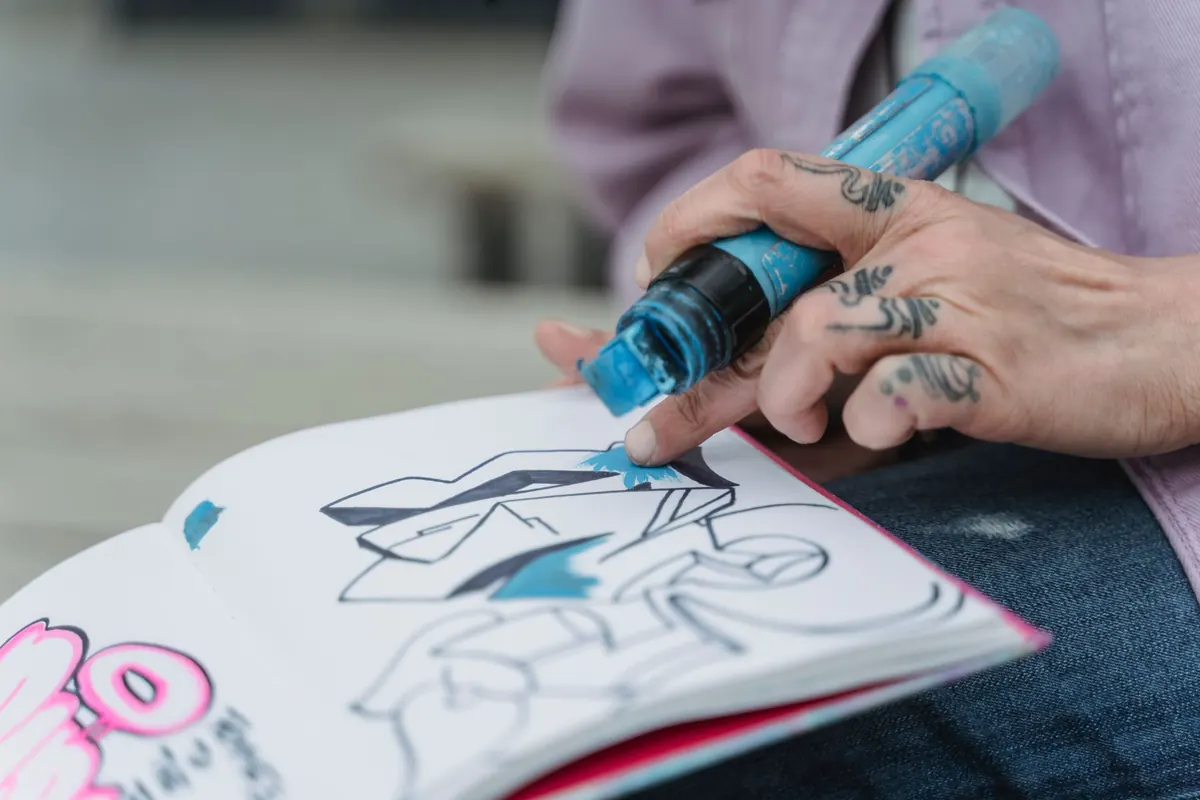
A portfolio built only from commissions tells half a story. Every piece in it has been shaped by a brief, a budget, an art director's notes and a deadline. What's missing is the part only you can supply: the subject matter you keep returning to, the colour you cannot stop using, the way you draw hands when nobody is watching.
That is why personal projects earn their place. They show taste and judgement, not just competence, and they give an art director a reason to contact you about a particular kind of job. What follows is a practical look at what counts as a personal project, how to choose one that strengthens your portfolio, and how to present it so it reads as professional work rather than a hobby.
What personal projects actually do for a portfolio
Client work answers a question someone else asked. Personal work answers one you asked yourself, and it shows the range you would like to be hired for. If you want to illustrate children's books, a self-initiated series of spreads with a consistent character says far more than three editorial commissions on unrelated subjects.
There is a practical benefit as well. Personal projects give you somewhere to test a technique without risk — a new brush, a limited palette, a different approach to texture — and to build a body of work around a theme. Three illustrations on the same theme read as a series. Ten unconnected pieces read as a folder of drawings.
Not everything has to be a magnum opus
“Personal project” often conjures up a graphic novel. It does not need to be one. It needs a constraint and a finish line.
- A weekly drawing habit, posted as a set at the end of each month.
- A short series of six illustrations around a single subject — markets, night buses, your grandmother's kitchen.
- A zine, a set of prints, a risograph run, a stall at a local fair.
- A redesign of something familiar: book covers for a series you love, posters for films that do not exist.
- A collaboration with a writer, a ceramicist or a musician, which borrows someone else's deadline.
That last one matters more than it looks. Deadlines that involve another person are the ones you keep.
Choosing projects that pull their weight
Before you start, ask what the project proves. If it looks exactly like the work already in your portfolio, it fills a page but adds nothing. If it sits so far from what you sell that no client could connect it to a brief they have, it may be a lovely hobby and a weak portfolio piece.
Three questions are usually enough to sort one idea from another:
- What gap does it fill? A subject, a format, a mood, a sector you have not worked in.
- Who would hire me after seeing it? If you cannot name a plausible client or commissioner, the project may be for you rather than for the portfolio.
- Can I finish it in a form I can show? Six finished images beat thirty sketches every time.
Keep the number of directions small. Most art directors are looking for a clear voice rather than a sampler, so two or three subject areas that sit comfortably together will do more for you than five that pull against each other.
How to present a personal project
Personal work is often displayed badly: a scattering of images with no title, no context and no order. Treat a personal project like a commissioned one when you present it. Sequence, framing and captions do most of the work.
Give it a name and a short paragraph
A title — even a plain one such as “Night Market, 2024” — tells the viewer this is a body of work rather than an accident. Follow it with two or three sentences: what prompted it, what you were testing, how many images it includes and what medium you used. Plain description beats an artist's statement every time.
Sequence the images
Open with your strongest image, not the first one you made. Then alternate between wide views and details so the eye has somewhere to travel. If the project tells a story, keep the order. If it does not, group the images by visual rhythm and let the colours answer each other.
Keep the presentation consistent
Hold the crop logic, margins and backdrop steady across the set. Show the work at a size that reads on a phone, because that is where most of your audience will meet it first. A project that is easy to scan gets looked at properly.
A short presentation checklist
- Three to eight images per project, edited hard.
- One or two process images at most — a sketch beside the finished piece.
- Mock-ups used sparingly: a print on a wall, a cover on a shelf. Not everything needs to sit on a desk.
- Credits for collaborators, writers and anyone whose text you illustrated.
- Alt text for every image, and captions that name the medium.
- A year or date, so the work has a place in your development.
Traps worth avoiding
The most common is the project that never ends. If a series has been “nearly finished” for a year, cut it back to the images that genuinely work and present those. An unfinished project in a portfolio reads as doubt, and a tight set of four reads as confidence.
The second trap is inconsistency for its own sake. Experimenting is healthy, but showing three wildly different styles with no explanation is confusing. Keep the range in the work and keep the presentation steady.
The third is disconnection. Delicate botanical drawings and heavy gig posters can sit in the same portfolio, but you will need to decide which one you are selling and put that first. Order is an argument; make yours deliberately.
A practical way to start this week
Pick one subject you keep circling back to. Set a number — six images, say — and a deadline four weeks out. Make the format small enough to finish: one square, a fixed palette, a single character. Draw the first two badly and the third better.
When the six are done, edit them down, write three sentences about the project, and add it to your portfolio as a section of its own rather than a scattering of images. Then repeat, once or twice a year. The accumulation is the point. A portfolio with two or three finished personal projects behind it looks like the work of someone with something to say, and that is usually what makes an art director stop scrolling and write an email.
Photo: Felicity Tai / Pexels